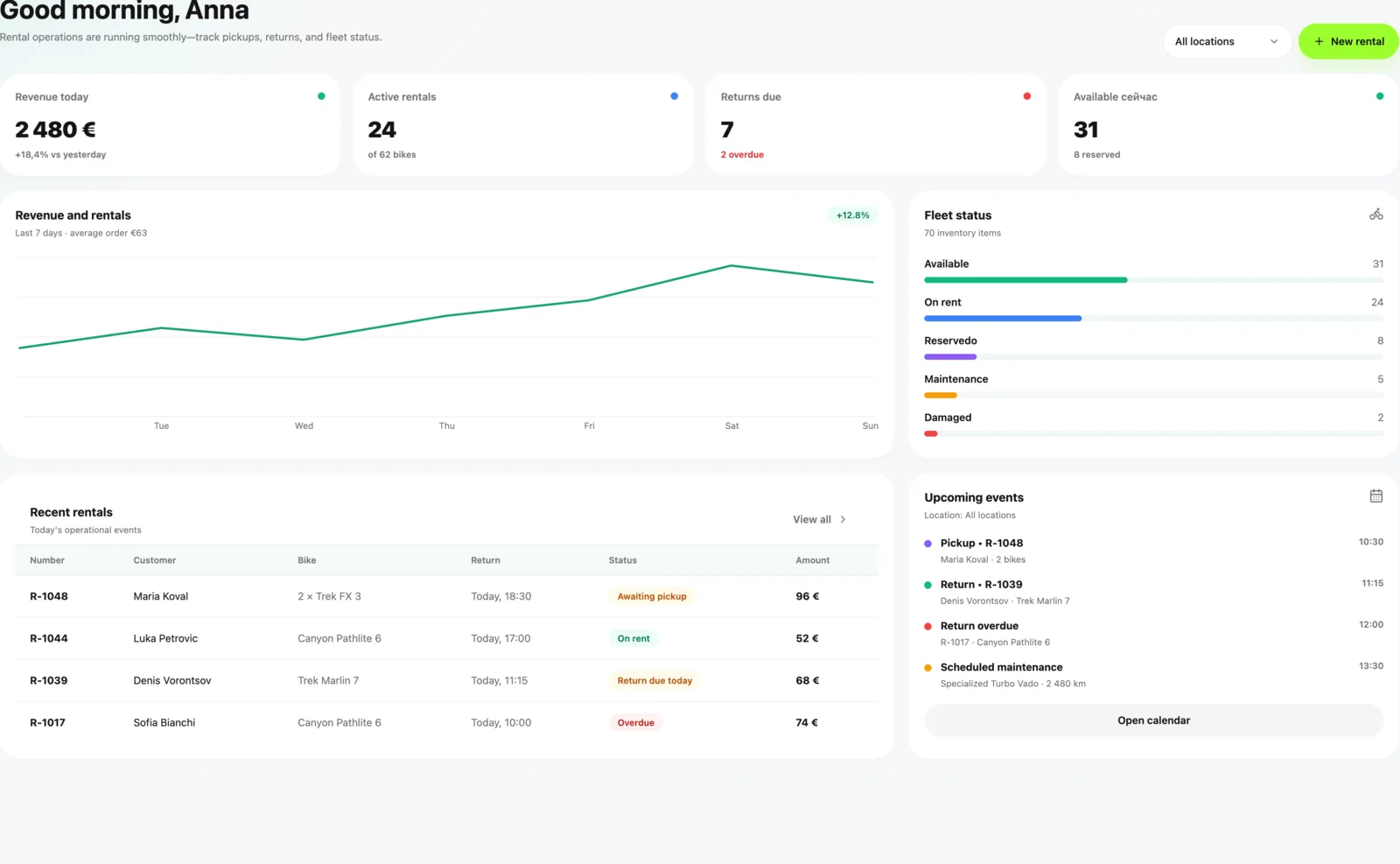
What bike rental software has to do
Bike rental software has four jobs, and most tools only do the first. It takes a booking, it keeps availability honest, it gets the right bike into the right rider’s hands at the counter, and it gets that bike back into service after the return. The gap between a booking widget and a working rental shop is the second half of that list.
bikerental is built around that second half. The unit of sale is a category and size (“Trail e-bike, Large”), the unit of operation is an individual bicycle with its own serial number, condition and service history, and the two are joined at pickup, when staff allocate a specific bike to the reservation.
How the pieces fit together
- Booking. Riders reserve a category, size and time window on a hosted booking page or an embedded widget. Walk-ins and phone bookings use the same engine from the admin side, so the rack and the website never disagree. See online booking.
- Availability. Reservations, turnaround buffers, maintenance blocks and location all feed one availability calculation, made on the server rather than in the customer’s browser. That is what stops two people buying the last medium e-bike.
- Fleet. Every bicycle is an asset with a frame number, size, components, battery health, location and history. See fleet management.
- Handover. Payment, waiver, deposit and condition photos happen in one mobile flow at the rack, rather than in a back-office tab.
- Maintenance. A bike that is in the workshop is unavailable to the calendar until it is rideable again. See maintenance.
Who it is designed for
The product is aimed at independent operators running roughly 20–200 bikes across one to three locations, with a mix of online bookings and walk-ins: city and leisure e-bike shops, MTB and destination rentals, and small groups growing from one counter to several. If you are in that range you are usually too operationally serious for a generic booking plugin and too small to justify a vehicle-fleet ERP.
Use-case pages go deeper for the three most common shapes of business: e-bike rental, MTB rental and multi-location rental.
What it costs, and what it does not
bikerental is a subscription. It does not take a percentage of your direct bookings; payment-processor fees stay with your payment provider. Plans differ mainly by fleet size, locations and whether integrated payments and deposits are included. Details are on the pricing page, and the trade-offs between flat-fee and commission models are worked through in bike rental software pricing: flat fee vs commission.
Choosing between products
No single product is right for every shop. If you are comparing platforms, start with the buyer’s guide, then use the booking system checklist to put the same questions to every vendor. For a side-by-side view of the market, see best bike rental software in 2026.
Frequently asked questions
Is bikerental only for bike shops?
It is designed for businesses that rent bicycles and e-bikes as their core activity: bike shops with a rental arm, dedicated rental operators and destination MTB or e-bike outfits. It is not presented as a tour-scheduling or repair-workshop system.
Do customers have to choose a specific bike when booking?
No. Customers book a category and size. Staff allocate a specific serial-numbered bike before or at pickup, which keeps the public booking flow simple without overselling.
Does bikerental take a commission on bookings?
No. Pricing is a subscription with no percentage of direct reservations. Your payment provider’s processing fees are separate and remain yours.
How many bikes can it handle?
Published plans cover up to 200 active bikes, and up to three locations on the multi-location plan. Larger or more complex set-ups can ask about Enterprise.
Can I import my existing fleet and customers?
Every plan includes CSV import for inventory and customers. Optional onboarding and data-import help is available for more complex fleets.