A bike is an asset, not a stock line
General rental software usually models inventory as quantities: twelve “Medium e-bikes”. That works for tents and speakers. It breaks for bicycles, because the twelve are not identical. One has a scuffed downtube and a battery with 38 charge cycles, one has just come back from a brake job, and one is on loan to the other shop.
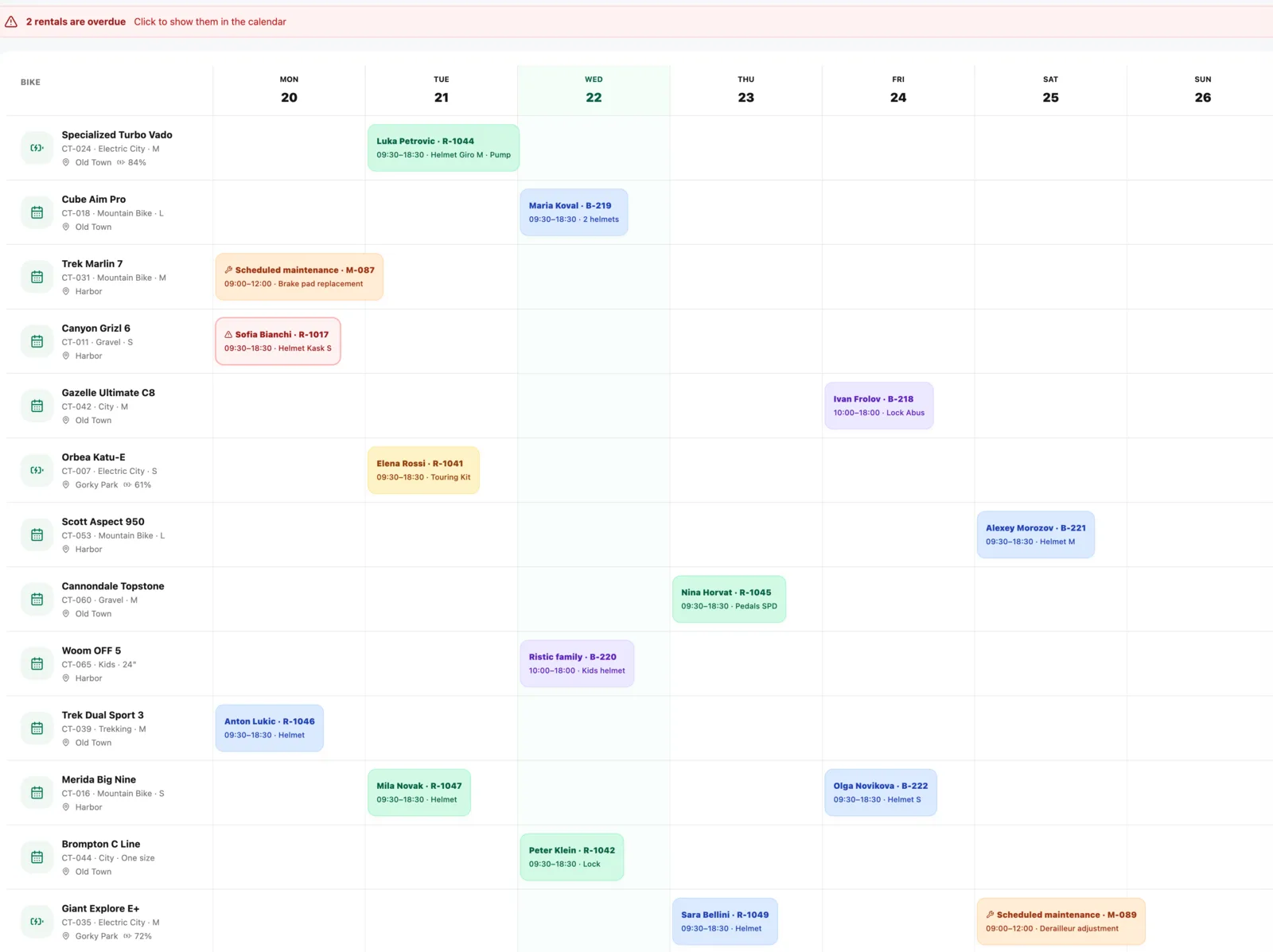
Fleet management in bikerental keeps two views honest at the same time: the sellable category that customers book, and the individual bicycle that staff hand over. Both are needed, and neither should be reconstructed from a spreadsheet.
What lives on the bike record
- Identity: frame number, serial number, size and components.
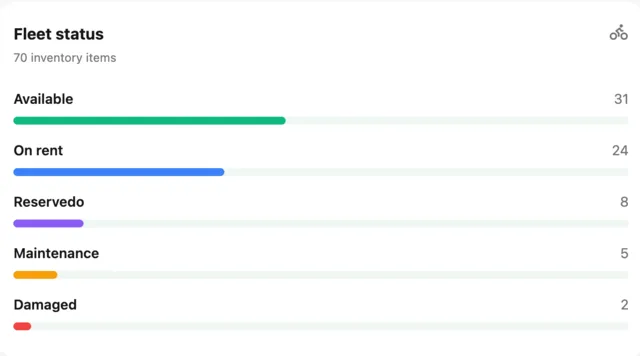
- State: current location and status, such as available, on rent, reserved, in maintenance or damaged.
- Battery: health information for e-bikes, so staff can see which bike is ready rather than which category still has a slot.
- History: service jobs, punctures and battery swaps accumulate against the asset, not in a group chat.
- Evidence: checkout and return photos sit on the rental record.
The result is that a question like “which bike went out on Tuesday and what condition did it come back in?” has a real answer. It also makes disputes about damage an evidence question, not a memory test.
Category first, serial second
Customers book by category and size. The shop chooses the physical bike. That split is what lets a public booking page stay short while the fleet stays controlled: a promised bike can be allocated days in advance, and everything else can wait until the rider is at the counter. The pattern is described in more detail in what a high-volume bike rental counter actually does.
Using the fleet data to make decisions
Once every bike is a record, the numbers become useful. You can see which sizes sell out and which sit idle, which assets spend more time in the workshop than on the road, and where the next purchase should go. The metrics worth tracking, and how to read them, are covered in bike rental fleet utilisation: the KPIs that matter.
For the modelling side, bike rental inventory management explains how to structure categories, sizes, accessories and individual bikes. Fleet status also connects directly to maintenance, because a bike in the workshop should leave the sellable pool automatically.
Getting your existing fleet in
Every plan includes CSV inventory import, so an existing spreadsheet of bikes does not need retyping. Optional onboarding and data-import support is available for fleets with more complicated histories.
Frequently asked questions
Can I track e-bike batteries?
Bike records include battery health for e-bikes. The data model also has room for odometer, battery and device identity if you later add locks or GPS.
What is the difference between a category and an individual bike?
A category, such as “Trail e-bike, Large”, is what customers book. An individual bike is the physical asset with its own serial number, condition and history, allocated by staff at or before pickup.
Can I import my existing bikes?
Yes. Every plan includes CSV inventory and customer import.