Why bike rental booking is harder than it looks
A restaurant table is interchangeable with the next one. A rental bike is not. Frame size, e-bike battery state, service status and even which location a bike is sitting in decide whether it can be sold for a given slot. A booking system that treats all of that as a simple stock count will eventually sell a bike that is not there.
The usual failure is not a dramatic bug. It is a Saturday morning, a customer with a confirmation email, and a rack where the last large e-bike is in the workshop with a flat battery. The rest of this page is about how bikerental’s booking flow is designed so that situation cannot be created in the first place.
Problem, mechanism, outcome
Problem: the last bike is sold twice
Two riders open the booking page at the same moment and both see one medium e-bike left. If availability is decided in the browser, or checked and written in two separate steps, both can complete a purchase.
Mechanism: availability is calculated and reserved on the server in a single step, and the reservation takes the capacity out of the pool before the second request is evaluated. Buffers between rentals and maintenance blocks are part of the same calculation. For the longer explanation, see how to prevent double bookings in bike rental.
Outcome: the second rider sees the slot as unavailable, or is offered the next size or time, instead of receiving a confirmation the shop cannot honour.
Problem: riders should not have to pick a serial number
Customers do not care whether they get EB-042 or EB-043. They care that a Large trail e-bike is waiting.
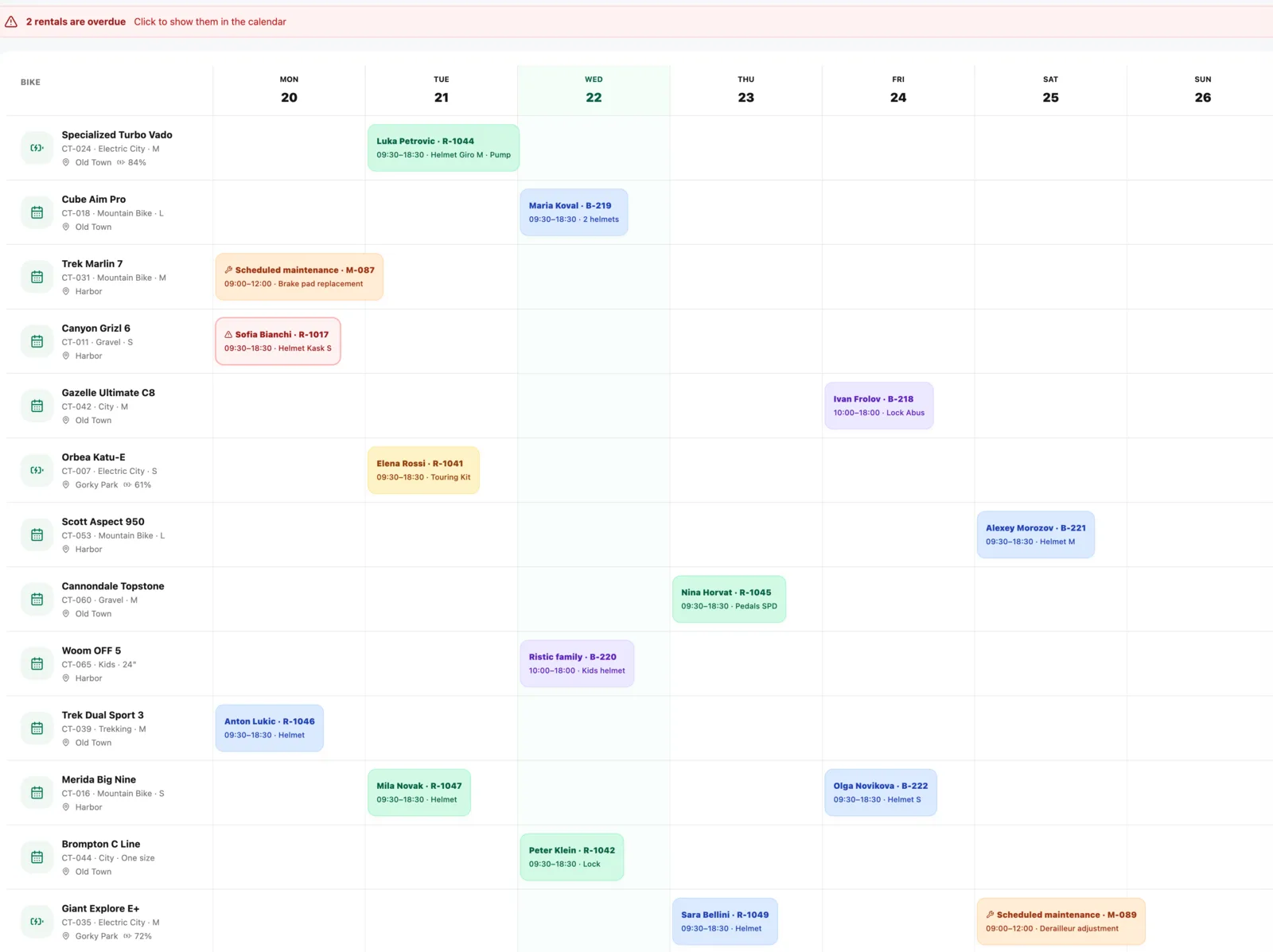
Mechanism: the public flow sells categories and sizes. The shop’s own bike-level allocation happens later, in the admin, and can be done in advance for a promised bike or at the rack when the rider arrives.
Outcome: a short booking flow that converts, and a rack the staff still control. The same idea drives the fleet management side of the product.
Problem: prices do not fit a rate card
Shops sell by the hour, half-day, full-day and multi-day, often with minimums and different rules for peak weekends.
Mechanism: rates support those durations, minimum rental lengths and turnaround buffers between bookings, so a 16:00 return is not sold again at 16:05.
Outcome: the price the customer sees is the price the shop meant to charge, and buffers protect the inspection time you actually need. If you are setting or revisiting your rates, bike rental pricing strategy covers how to structure them.
Walk-ins, phone bookings and the shop website
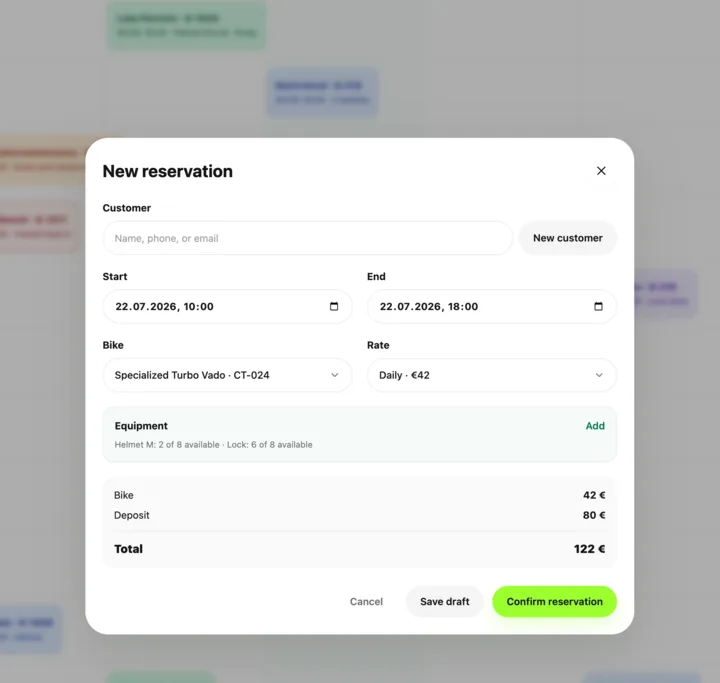
Online bookings are only part of a counter’s day. Walk-ins and phone reservations are created from the admin side using the same availability engine as the public site, so there is one source of truth for the rack. You can use bikerental’s hosted booking page, or embed the same availability on your own website.
What to check in any booking system
Whatever you use, put the same questions to it: does it check maintenance and buffers, can it sell categories while allocating bikes later, does it treat deposits and waivers as part of the booking, and does it handle walk-ins through the same engine? The bike rental booking system checklist turns those into a scorecard you can use with any vendor.
Frequently asked questions
Can two customers book the same bike at the same time?
Availability is decided on the server and a reservation removes capacity in the same step, so the second customer is shown the slot as unavailable rather than being confirmed.
Can I embed booking on my own website?
Yes. You can use bikerental’s hosted booking page or embed the same availability on your shop website.
Do walk-in customers use the same system?
Yes. Walk-ins and phone bookings are created from the admin using the same availability engine as online bookings.
Does the customer choose a specific bike?
No. They choose a category, size and time window. Staff allocate a specific bike before pickup or at the rack.