A double booking is a data problem, not a staffing problem
Every rental shop has a story about the double booking. Two groups, one last set of e-bikes, and a manager doing arithmetic on the counter while a queue forms. The usual response is to blame someone for not checking the calendar. That is almost always the wrong diagnosis.
Double bookings happen because the system allowed something impossible to be confirmed. Fixing it means understanding the four ways that happens, and then putting a rule in the software for each one, so nobody has to remember. This article walks through those four causes, the rules that remove them and what to do on the day it happens anyway.
Cause 1: two customers, one last bike
Two people open the booking page in the same second and both see one medium e-bike left. If the check and the reservation are separate steps, or if availability is worked out in the browser, both can pay.
The rule: availability is decided on the server, and a reservation removes capacity in the same step as the check. The second request sees the updated pool. If the software cannot tell you this is how it works, ask to see it happen.
Cause 2: the bike is not actually there
The calendar is empty, but the bike is in the workshop with a flat battery, has a bent wheel from yesterday, or is at your other shop. The reservation is valid on paper and impossible in the world.
The rule: maintenance, damage and location are part of availability. A bike marked unavailable for any of those reasons disappears from online and counter sales immediately, and stays out until marked ready. See maintenance and the maintenance schedule.
Cause 3: no time between rentals
A customer returns at 16:00. The system says the bike is free at 16:00, so a 16:05 booking is confirmed. In reality the bike needs to be checked, cleaned and possibly charged.
The rule: turnaround buffers. Set a buffer after each rental, sized for the bike type: perhaps fifteen minutes for a city bike, longer for an e-bike that needs a battery check. The engine then treats the bike as unavailable until the buffer has passed.
Buffers are the cheapest and most overlooked defence. Without them, the schedule is a promise that a late return will break. If you are unsure how long a turnaround really takes, time it for a week and use the 80th percentile, not the average.
Cause 4: different channels, different truths
Online bookings live in one place, walk-ins in a notebook, phone bookings in someone’s memory, and a marketplace listing has its own count. Each is consistent on its own and wrong together.
The rule: one availability engine for every channel. Walk-ins and phone bookings should be created through the same system that powers the website, and anything sold elsewhere should reduce the same pool, or be capped so it cannot exceed what you can deliver.
Category booking makes the problem easier
Overbooking is much easier to prevent when customers book a category and size, such as “Trail e-bike, Large”, rather than a named bike. The engine only has to guarantee that the number of bookings never exceeds the number of ready bikes in that category. Staff then allocate a specific bike at pickup, choosing one that is actually ready. This is the “category first, serial second” pattern described in bike rental operations and inventory management.
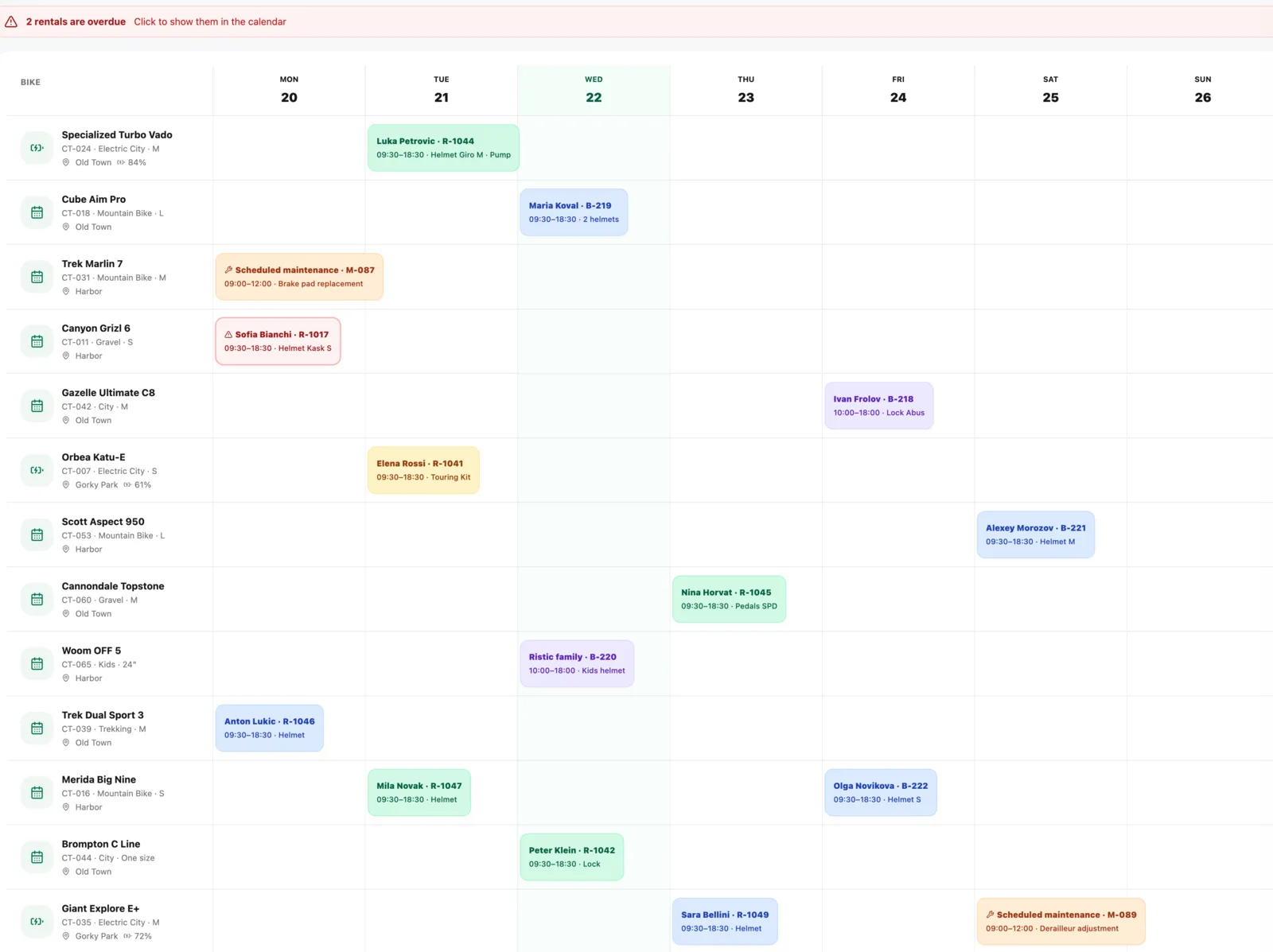
A rule set you can adopt
- Availability is decided on the server, in the same step as the reservation.
- Every channel uses the same engine.
- Every category has a turnaround buffer.
- Maintenance, damage and inspection remove a bike from sale immediately.
- Location is part of availability.
- Customers book categories; staff allocate specific bikes.
- Marketplace or partner inventory is capped below your real capacity.
- Late returns trigger a check of the next booking on that bike.
A small safety margin
Even with all of this, consider holding back one or two bikes per busy category from online sale. That gives you a reserve for a bike that fails a check, for a walk-in you would hate to turn away, and for the customer whose group grew by one. It costs a little revenue in exchange for a lot of calm.
What to do when it happens anyway
- Tell the customer early, ideally before they arrive, and say what you will do.
- Offer an equivalent or better bike if you have one, at the same price.
- Offer a slot later the same day or the next, at a discount if you can.
- Refund promptly if they choose not to ride.
- Find the cause, using the four above, and fix the rule, not the person.
How to test your own system
- Book the last bike from two browsers at once.
- Mark a bike as in maintenance, then try to book it online and at the counter.
- Make a 16:00 return and try to book the same bike at 16:05.
- Create a walk-in, then check the website shows the reduced availability.
- Move a bike to another location and try to sell it from the first.
If any of these succeeds, you have found a double booking before a customer did. To see all five tests pass in bikerental, read about online booking or book a demo.
Frequently asked questions
What causes double bookings in bike rental?
Four things: two customers booking the last bike simultaneously, a bike that is unavailable but still shown as free, no buffer between rentals, and different channels keeping separate counts.
Do turnaround buffers really help?
Yes. A buffer after each rental gives you time to inspect, clean and charge a bike, and stops the system selling it the minute it is returned.
Should I let customers choose a specific bike?
Usually not. Selling categories and sizes and allocating specific bikes yourself makes overbooking easier to prevent and keeps the booking page short.